
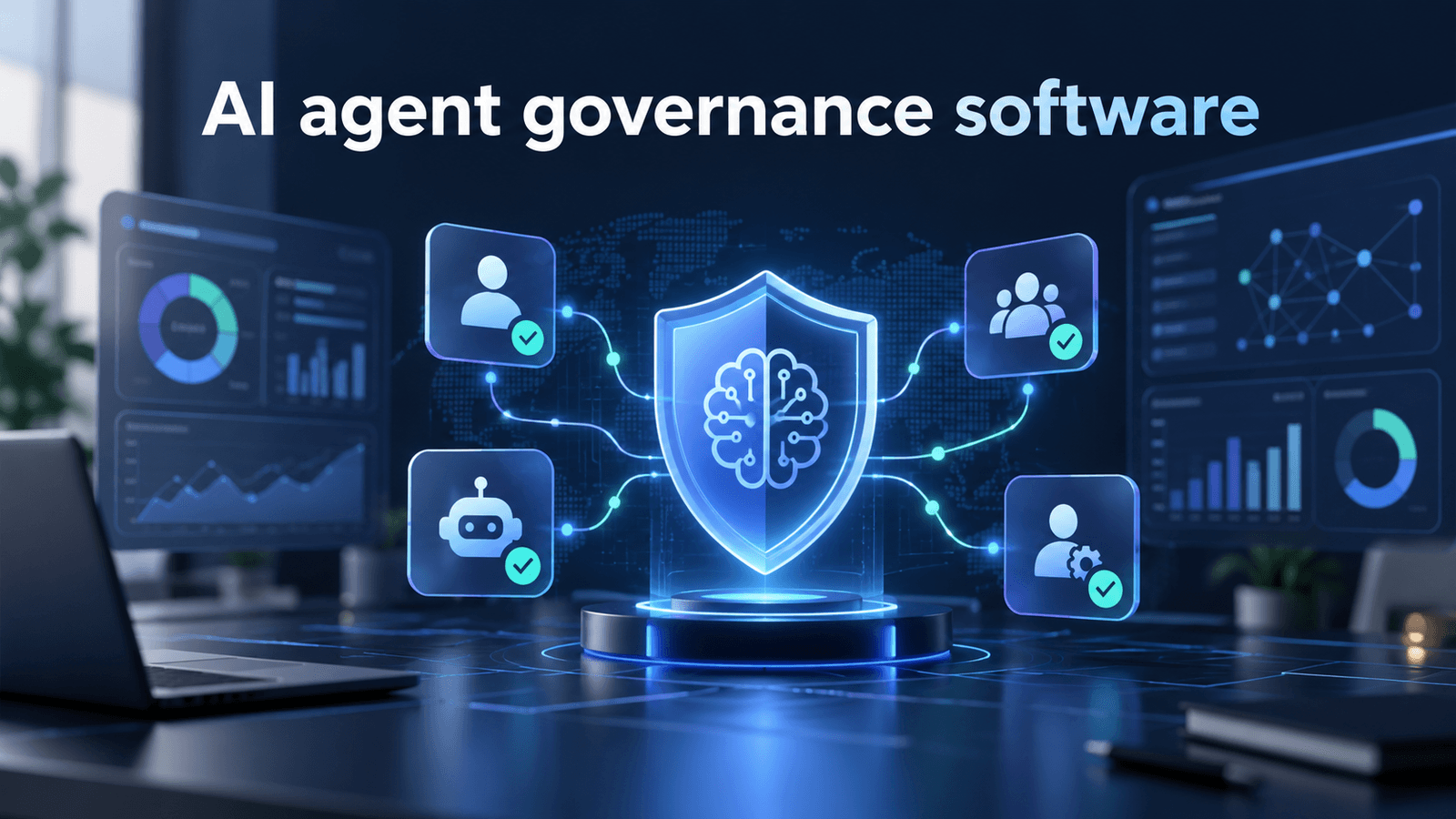
AI agent governance software helps small businesses control shadow AI, permissions and data access while creating a focused SaaS opportunity.
AI agent governance software is becoming more relevant as companies give AI agents access to files, apps, customer data, and business workflows. The opportunity is not another general AI assistant. It is a focused control layer that helps smaller companies discover agents, restrict permissions, monitor activity, and require human approval for high-risk actions.
AI agent governance software is becoming more relevant as companies give AI agents access to files, apps, customer data, and business workflows. The opportunity is not another general AI assistant. It is a focused control layer that helps smaller companies discover agents, restrict permissions, monitor activity, and require human approval for high-risk actions.
Why AI Agent Governance Is Becoming a Business Problem
Microsoft’s September 2026 security updates emphasize discovering local AI agents, governing what they can access, and extending Zero Trust controls to agent traffic. NIST has also launched an AI Agent Standards Initiative focused on secure adoption, identity, and interoperability. OWASP introduced an Agent Control Standard in September 2026. For small businesses the practical issue is straightforward: employees may adopt AI tools faster than IT teams can track them. That can create shadow AI, excessive permissions, weak audit trails and unclear responsibility when an agent performs an action. Microsoft has specifically highlighted agent sprawl, identity, least-privilege access and governance as emerging security concerns.
The SaaS Opportunity for Small Businesses
A focused product could give SMEs one dashboard for AI agent inventory, permission visibility, access policies, activity logs, and approval workflows. Instead of replacing enterprise security platforms, it could serve companies that need practical governance without a large security team. Useful MVP features include agent discovery, permission mapping, alerts for sensitive-data access, approval gates for high-impact actions, audit logs and policy templates. Integrations with identity, cloud and productivity platforms could expand the product later.
For founders studying adjacent products, explore AI App Space Featured Apps to see how emerging AI products are being packaged around specific business workflows.
Why Customers Could Pay Every Month
Governance is continuous because agents, integrations, permissions, and employees change. A subscription could therefore be priced by managed agents, users, or connected systems. Illustrative plans might begin around $49 per month for small teams, with higher tiers for advanced policies and reporting. One theoretical route to $10,000 MRR is 100 customers averaging $100 per month. This is a business scenario not a revenue guarantee.
Validate Before Building
Interview 15–20 small IT teams, agencies, and AI-heavy businesses. Ask which agents they use, how permissions are controlled, what gets logged, and which actions require approval. Build only after the same pain appears repeatedly. A useful first version could focus narrowly on discovering agents and highlighting risky permissions before expanding into broader governance. For additional background on the category, read AI Agent Governance on AI App Space.
Want This Type of SaaS Built?
If your business needs a lightweight AI governance, monitoring, or approval system, APPS Hunt can help explore a focused product or internal automation workflow designed around your operations.
Follow Apps Hunt
Follow Apps Hunt on Pinterest, Instagram, and TikTok for AI tools, SaaS opportunities, automation ideas and practical app-business research.
Frequently asked questions
AI agent governance software helps organizations discover, monitor, and control AI agents. It can manage permissions, activity records, access policies, approvals, and security rules.
Small businesses may use multiple AI tools without dedicated security teams. Governance helps them understand which agents exist, what those agents can access, and what actions they can perform.
Shadow AI refers to AI tools or agents used inside an organization without proper approval, visibility, or centralized management. It is similar to the older problem of shadow IT.
Businesses can assign separate identities to agents, restrict access to required resources, use least-privilege policies, and require additional approval for sensitive actions.
Yes. Agents with excessive permissions or poorly controlled integrations may access, modify, transfer, or expose information beyond what their intended task requires.
Core features can include agent discovery, permission monitoring, identity management, activity logging, security alerts, approval workflows, policy enforcement, and audit reporting.
Not exactly. AI security covers a broader range of threats, while governance focuses more specifically on visibility, permissions, policies, accountability, lifecycle management, and organizational control.
Interview potential customers before building. Look for repeated problems involving agent visibility, permissions, auditing, compliance, or manual approval processes and test whether businesses would pay to solve them.
Potential customers include SMEs using multiple AI agents, digital agencies, software companies, IT service providers, professional firms, and businesses automating sensitive workflows.
It is possible as a business target, but not guaranteed. For example, 100 customers averaging $100 monthly would produce $10,000 MRR, so founders should first validate willingness to pay, retention, and customer acquisition costs.